LOCATION FILE
Ale's Stones
Kåseberga, Ystad, Skåne
OVERVIEW
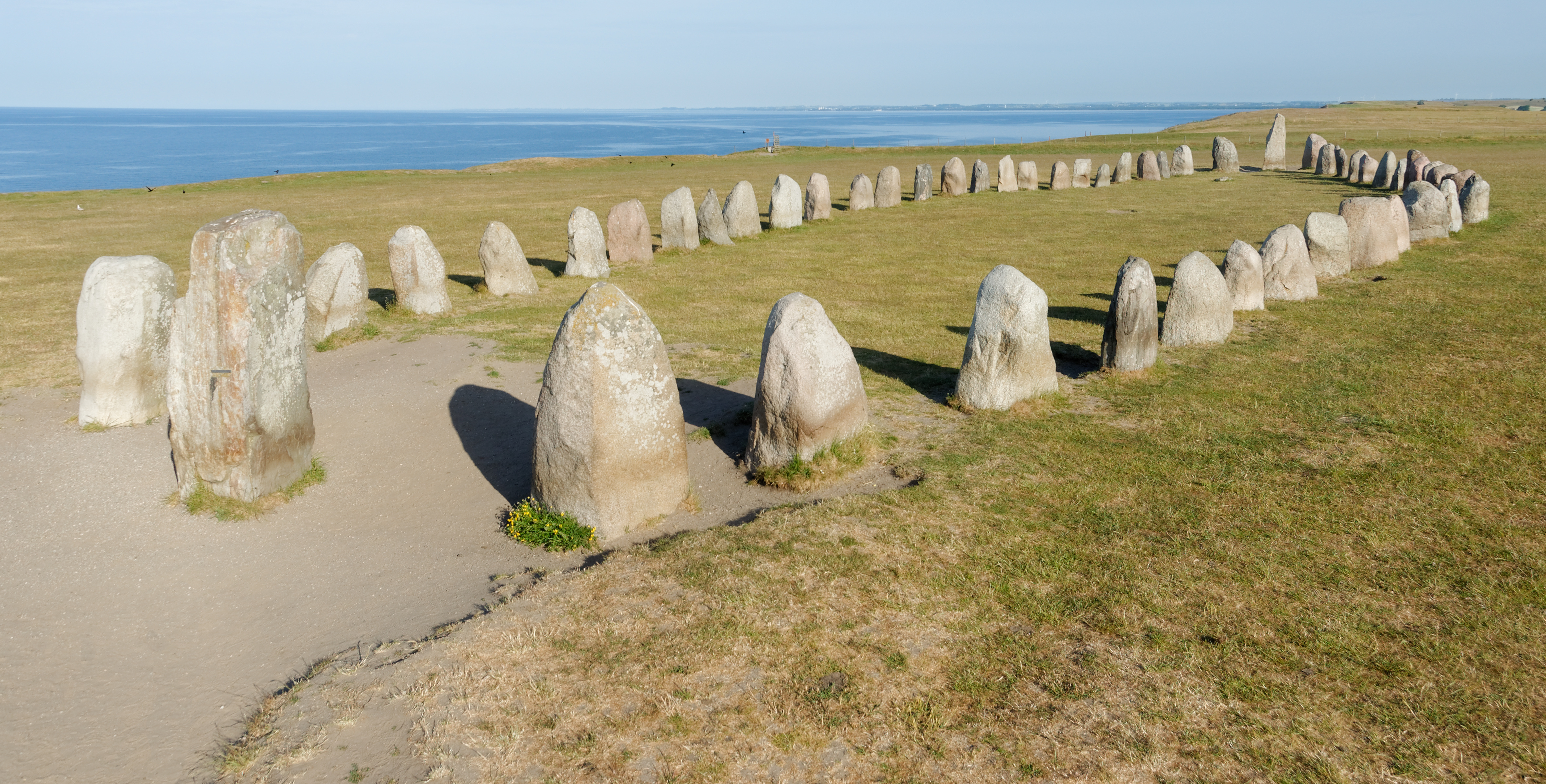
Ale's Stones is a megalithic monument in Scania in southern Sweden: a stone ship, oval in outline, 67 metres long, formed of 59 large boulders weighing up to five tonnes each, with the stones at each end markedly larger than the rest. It stands on the cliff above the fishing hamlet of Kåseberga, looking out over the Baltic.
HISTORY
Seven radiocarbon results have been obtained from the site, and they do not agree neatly — one indicates the material is considerably older than the monument's likely construction, which is part of why the dating argument continues.
REPORTED ACTIVITY
The function and purpose are much disputed. It is generally taken to be a grave monument or a cult centre; another line of argument makes it a solar calendar. Howard Crowhurst has proposed that the ship is aligned on sunset at the summer solstice, with further alignments to the lunar standstill. The name attaches it to a legendary King Ale, said to be buried beneath it. Nothing has been excavated from it that settles the question. The entry records a very large deliberate structure whose builders' intention is genuinely unknown — which is a different kind of unexplained from most of this map, and a more solid one.
VISITING
Free and open at all hours, a steep ten-minute walk up from the car park at Kåseberga. Exposed and windy. Signposted from Route 9 east of Ystad.
EXTERNAL RESOURCES
INVESTIGATION RECORD
0 GROUPS · 0 VISITS
No group has logged an investigation here yet.
HISTORICAL RECORD · 0 CITED ENTRIES
SIGN IN TO CONTRIBUTENo cited entries yet. Deeds, newspaper reports, census lines, photographs, ledgers — anything with a source.
COMMUNITY EVIDENCE
SIGN IN TO VIEWEvidence filed at this location — photos, recordings, documents, notes — is visible to signed-in investigators.
GROUP FINDINGS